Stop Blaming Your Willpower for the 3-Cup Days. The Problem Could Be in Your Mug
A medium-roast blend with lion's mane and half the caffeine of drip trades the mid-day drop for steadier energy that lasts through the workday.


It hits around mid-afternoon. The screen blurs a little, the words on it stop landing, and you catch yourself reading the same line three times. So you get up, refill the mug, and tell yourself it's just been a long day.
You blame the calendar. The early start, the back-to-back calls, the kids, the poor sleep. Anything but the drink in your hand — the one thing you've never once suspected.
Why does the crash keep coming back?

Lean harder on coffee, and the next slump gets deeper.
Two cups become three. Three become a permanent low hum of jitter.
You know the feeling. Wired but foggy. Buzzing hands, racing chest, and somehow still unable to focus on the one thing in front of you. For some people it comes with a queasy stomach or a jittery edge that reads as anxiety.
You've tried to fix it. Cutting back left you dragging by noon.
Powering through left you frayed by dinner — the version of you your family gets is the leftover one, not the sharp one. The cycle doesn't break, because the thing you're using to break it is the thing feeding it.
What if the caffeine itself is the trap?

A standard cup carries 95mg of caffeine — a lot at once.
It spikes you fast. What spikes fast falls fast. Call it the caffeine cliff: the higher the climb, the harder the drop a few hours later.
Most people answer the drop with another cup, which just builds a taller cliff for later. That's the loop. It's not your schedule and it's not your willpower.
There's a quieter fix hiding in plain sight.
Pairing less caffeine with L-theanine — a calming compound found naturally in tea leaves — smooths the climb into a gentle rise instead of a spike. You still feel awake. You just don't feel the edge, and there's no cliff waiting at 3pm.
Add in lion's mane, a mushroom researchers have long linked to sharper focus, and the goal shifts. Not a bigger jolt. A steadier line.
So, what does steadier energy actually feel like?
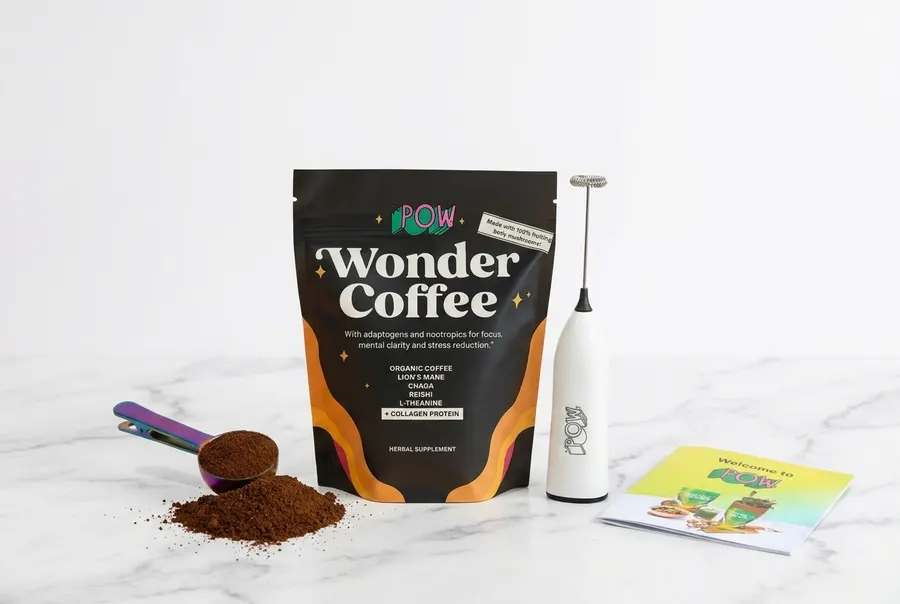
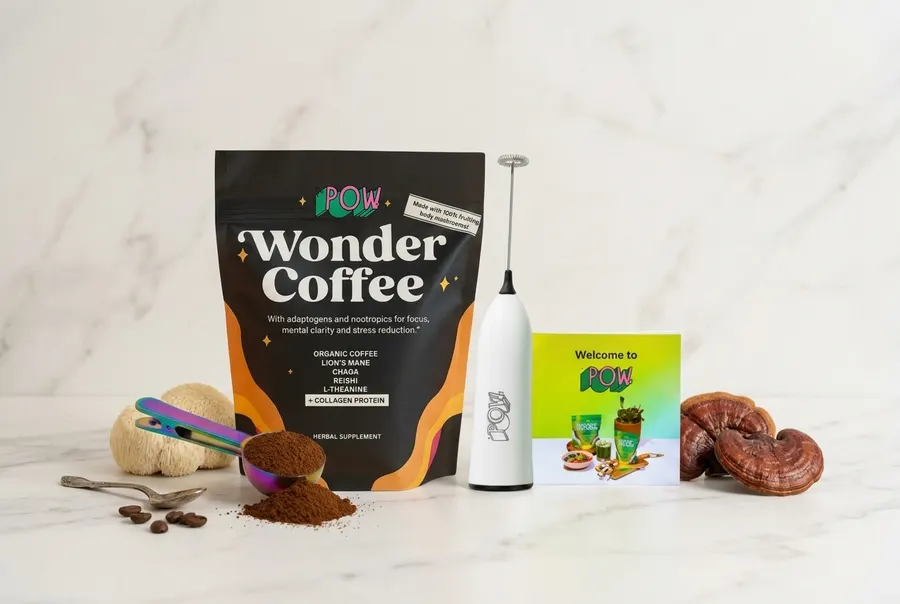
Wonder Coffee is a medium-roast arabica from Huila, Colombia, with lion's mane and chaga.
It carries 45mg of caffeine per cup, roughly half a standard drip.
Less caffeine, paired with L-theanine, is how it sidesteps the caffeine cliff. You get a rise that holds through the workday instead of a spike that dumps you mid-afternoon.
Most people don't taste the mushrooms.
No earthy funk, no grit at the bottom of the cup. Someone who drinks their coffee black would clock it as a smooth medium roast, a little less acidic than usual.
And it's built to be trusted: real fruiting-body extract, no mycelium or fillers, made in the USA, with every batch third-party tested for heavy metals and pesticides. The mushrooms do the quiet work while the coffee tastes like coffee.
What changes when you swap the cup?
The shift isn't one dramatic thing — it's a handful of small ones that stack up over a normal week. Here's what tends to move first for people who make the switch.
What's actually in it?
Dose is where most mushroom coffees quietly cut corners — weak amounts that barely register. This is the short list of what's in every cup, and why each piece is there.
Why people don't go back
 1
1
Half the caffeine, full focus without the jitters
Wonder Coffee delivers 45mg caffeine per 8oz cup—less than half a standard drip coffee—paired with 120mg L-theanine, an amino acid that smooths caffeine's edge. This synergy sustains alertness for hours without the spike-and-crash cycle or anxiety that sends people back for a third cup by noon. The result is steadier energy that carries through the workday.
 2
2
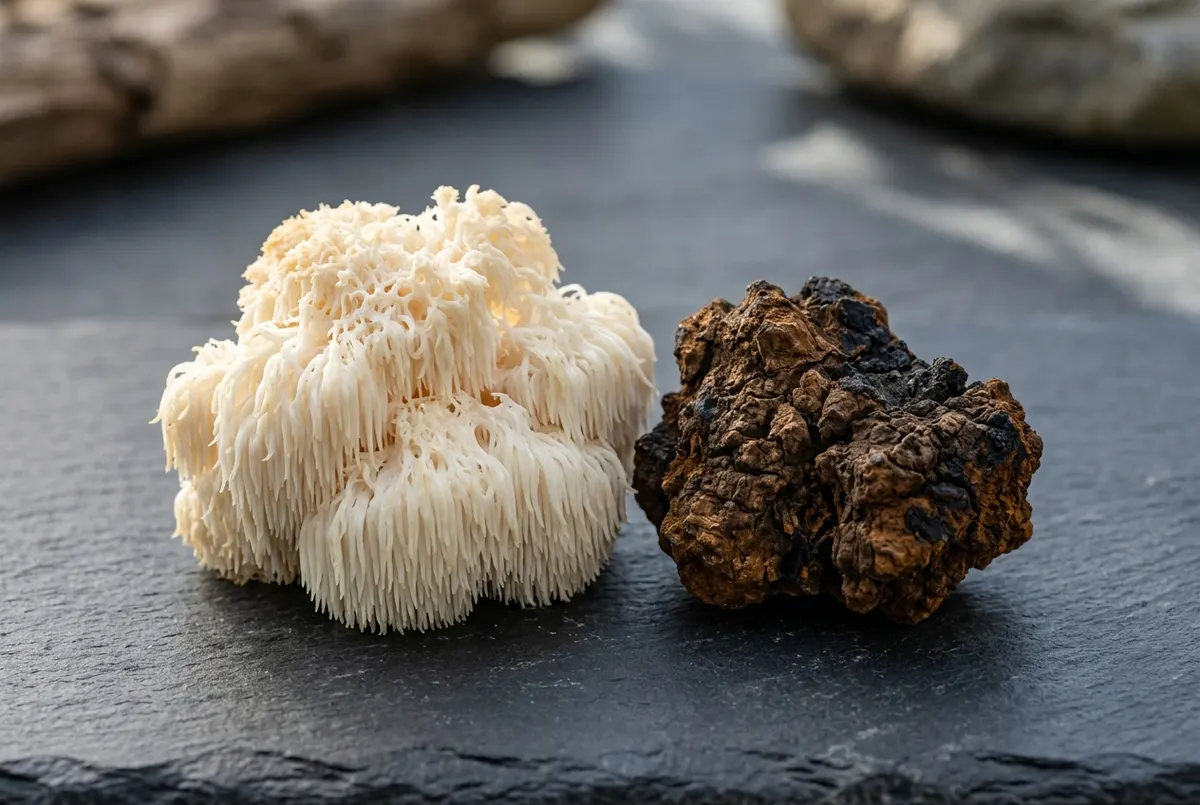
8x concentrated fruiting body mushroom extracts, not mycelium filler
Wonder Coffee uses 8:1 fruiting body extracts—meaning 1g of extract contains the active compounds of 8g of raw mushroom. Lion's Mane (500mg per serving) and Chaga (250mg per serving) are grown and extracted in the US, then third-party tested for heavy metals, pesticides, and beta-glucan content by Eurofins. Low-quality competitors sell mycelium on grain, which delivers negligible active compounds. Specificity and sourcing transparency matter.
 3
3
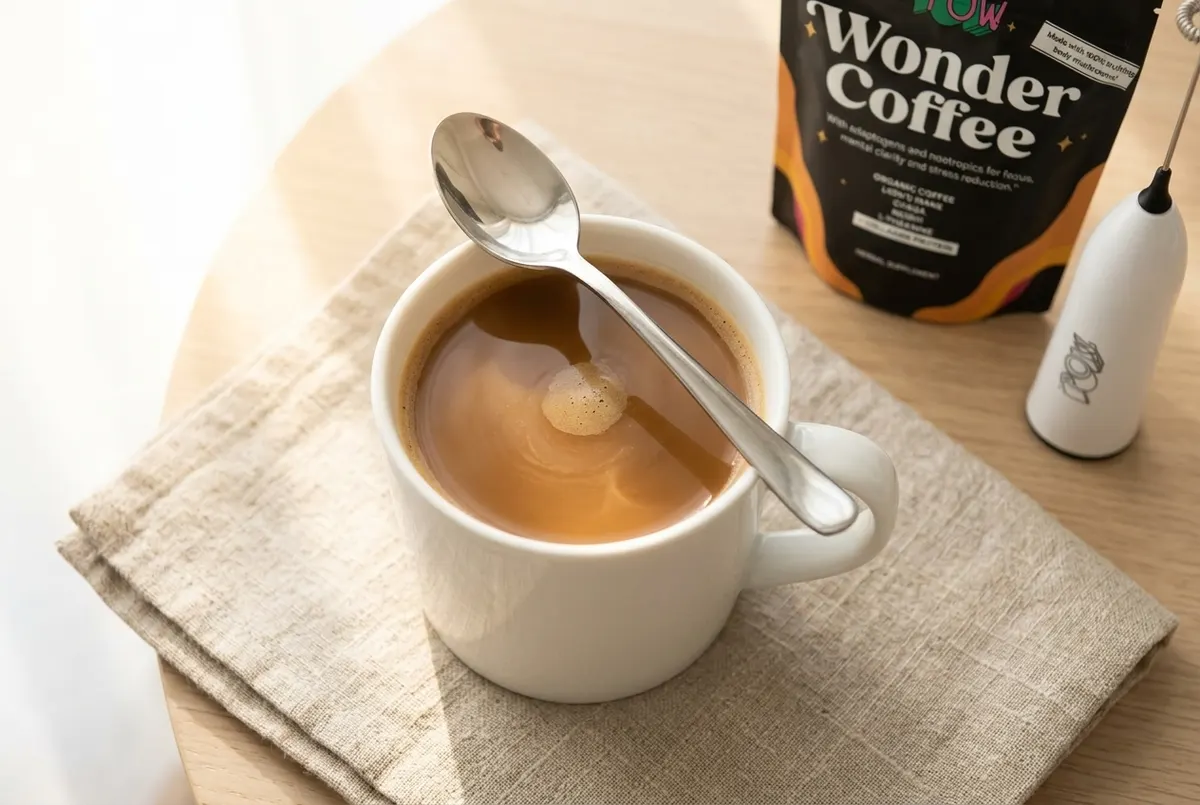
Taste parity with real coffee resolves the earthy-flavor objection
The medium-roast Arabica from Huila, Colombia carries the flavor profile; the mushroom extracts enhance without overpowering. Black-coffee drinkers report no earthy aftertaste, no gritty residue, and no need for creamer to mask flavor. This matters because functional mushroom coffees often lean heavily on milk and sweetener to disguise taste. Wonder stands alone, tasting like medium-roast coffee first.
 4
4
Sustained mood lift and better sleep from adaptogens working over weeks
Reishi (840mg per serving) is a known adaptogen that helps modulate stress response and promote emotional balance—benefits that compound over 2–3 weeks of consistent use, not days. Reviewers report improved mood within a week and uninterrupted sleep after 2.5 weeks. These are lived outcomes, not isolated compounds: the full formula's synergy supports resilience and nervous-system calm, a secondary benefit many discover only after committing to the ritual.
 5
5
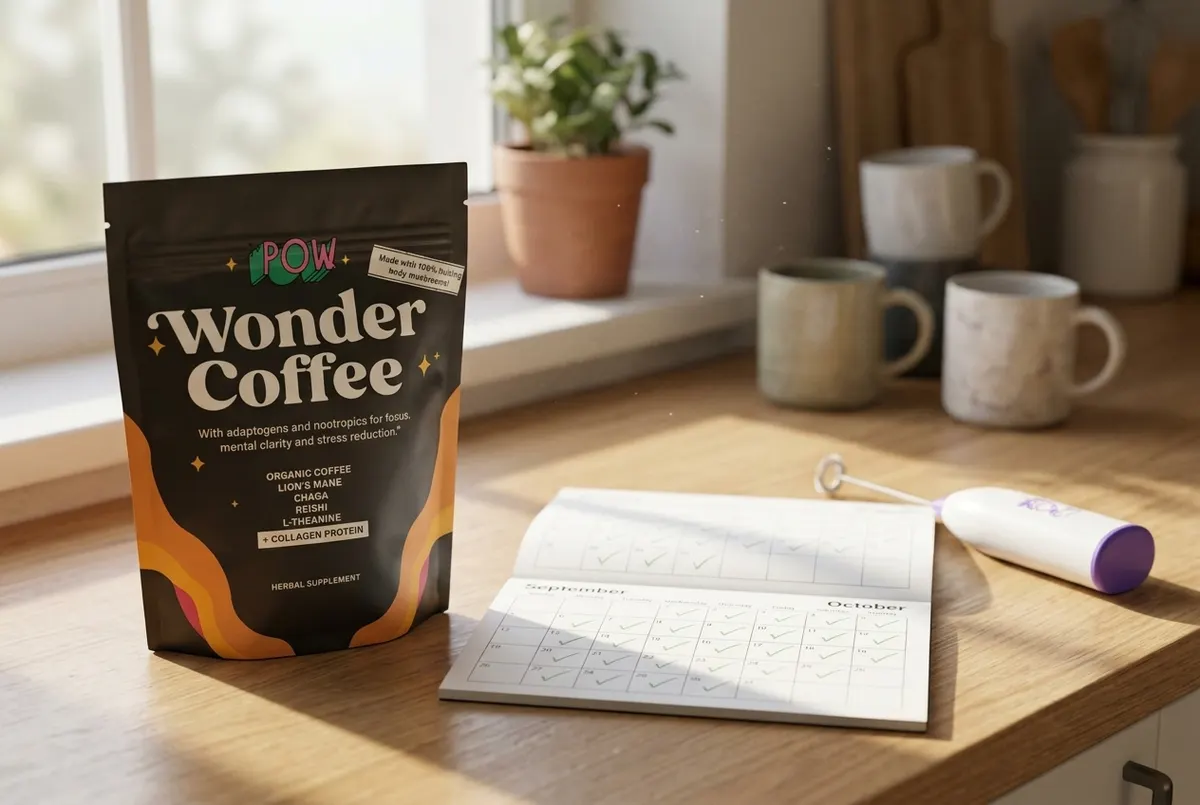
60-day guarantee lets you test the claim without financial risk
Wonder backs the formula with a 60-day money-back guarantee—unopened or not. This signals confidence in the product and removes the objection that functional mushroom claims are unproven hype. Skeptical buyers who tried competitors and saw no difference can commit to 2 months of consistent use and walk away if the sustained energy, focus, or mood lift doesn't materialize. The guarantee is the brand's assertion that results are real, not theoretical.
What are people saying about Wonder Coffee Starter Pack?
The skepticism is almost always the same going in — another mushroom coffee, probably gritty, probably useless. What people say after a few weeks tells a different story.
How long until you notice a difference?
Some of this you feel on day one; some of it builds. Here's a realistic look at what the first weeks tend to bring, because the mushrooms work on a slower clock than the caffeine does.
How does it actually compare?
The mushroom coffee shelf is crowded, and a lot of it leans on cheap mycelium and doses too small to matter. Set side by side, the differences are hard to miss.
- Mycelium on grain, not fruiting body
- Under 1000mg total mushroom content
- Gritty texture, earthy aftertaste
- Added sugar or sweeteners
- L-theanine absent or minimal
- No third-party testing verification
- 8:1 fruiting body extracts only
- 3000mg+ clinically dosed mushrooms
- Smooth, tastes like real coffee
- No fillers, sugar, or additives
- 120mg L-theanine with 60mg caffeine
- Eurofins tested every lot
Try Wonder Coffee Starter Pack
Still wondering about a few things?
The questions come up again and again: does it really taste like coffee, will half the caffeine leave me dragging, is it worth the price? Here are straight answers.
Trade the crash for steady